The Emerging Technologies That Could Transform Everyday Life by 2030
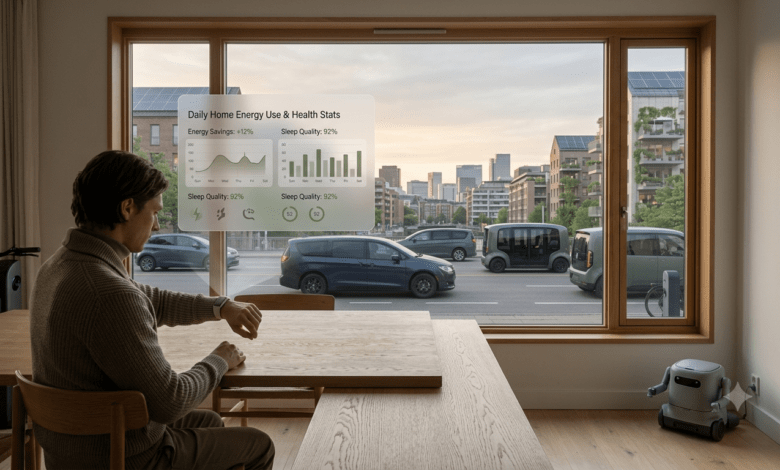
The period leading up to 2030 marks a significant technological transition. Innovations that once existed strictly in research labs or science fiction—such as proactive artificial intelligence, spatial computing, and personalized medicine—are rapidly shifting into ordinary household infrastructure.
Rather than experiencing technology through isolated screens, daily life will increasingly feature interconnected systems operating quietly in the background. Understanding how emerging technologies are transforming everyday life requires examining what is currently under development, what is realistic by 2030, and the trade-offs this level of connectivity brings.
1. Artificial Intelligence and Autonomous AI Agents
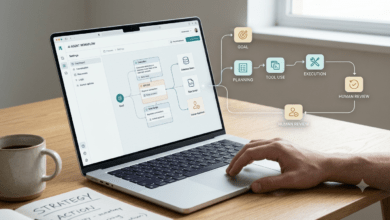
Artificial intelligence is evolving from simple text generators into autonomous agents capable of multi-step planning and execution.
-
What It Is: AI agents are software systems designed to perceive their environment, make decisions, and execute tasks independently to achieve specific goals without needing constant step-by-step human prompts.
-
Everyday Impact by 2030: Instead of manually searching for flights or scheduling service appointments, an AI agent will handle administrative tasks autonomously. It can review your calendar, rebook delayed travel, or negotiate utility bills on your behalf based on your preferences.
-
Real-World Application: Automated administrative assistants that manage personal calendars, organize household budgets, and coordinate home repairs directly with service vendors.
-
Benefits vs. Risks: AI agents significantly cut down on domestic friction and administrative burden. However, delegating actions to software increases risks related to unintended financial commitments, algorithm errors, and data privacy exposure.
-
Adoption Outlook: High. Autonomous digital workflows are expanding rapidly and will likely be standard personal utilities well before 2030.
2. Robotics and Smart Home Automation
Home automation is progressing from voice-activated light switches toward physical assistance and context-aware living spaces.
-
What It Is: The convergence of robotic hardware, environmental sensors, and localized computing that allows physical spaces to adapt to human behavior automatically.
-
Everyday Impact by 2030: Bipedal and wheel-based utility robots will begin handling physical chores such as folding laundry, loading dishwashers, and sorting waste. Smart homes will optimize energy usage dynamically, adjusting thermal settings based on real-time room occupancy and local electricity pricing.
-
Real-World Application: Smart kitchens that track food freshness to suggest recipes and reduce waste, alongside autonomous vacuum-mop hybrid units with articulate mechanical arms.
-
Benefits vs. Risks: Automating physical maintenance frees up valuable personal time and lowers household energy bills. On the downside, high hardware costs, maintenance requirements, and vulnerability to device hijacking remain key barriers.
-
Adoption Outlook: Moderate. Basic smart home automation will become universal, but complex home robots will remain premium consumer items through 2030.
3. Extended Reality (AR, VR, and MR)
Spatial computing is bridging the gap between physical environments and digital interfaces.
-
What It Is: Extended Reality (XR) encompasses Augmented Reality (AR), Virtual Reality (VR), and Mixed Reality (MR), blending digital graphics into physical space through lightweight glasses or headsets.
-
Everyday Impact by 2030: AR glasses could reduce dependence on handheld smartphones. Real-time navigation arrows overlaid on city sidewalks, instant language translation subtitles during conversation, and virtual workspaces projected onto physical desks will become everyday tools.
-
Real-World Application: Remote workers collaborating in shared virtual studios as digital avatars or technicians accessing hands-free step-by-step repair manuals projected directly onto equipment.
-
Benefits vs. Risks: XR allows immersive hands-free computing and richer remote communication. Risks include digital eye strain, public recording concerns, spatial distraction, and visual clutter.
-
Adoption Outlook: Moderate. Bulky hardware is rapidly shrinking, making daily-wear AR glasses feasible for mainstream adoption around 2028–2030.
4. Autonomous Vehicles and Smarter Transportation
Transportation networks are gradually shifting away from manual driving toward electrification, shared fleets, and automated control.
| Transportation Area | Current Capability | Anticipated Status by 2030 |
| Personal Vehicles | Level 2/3 (Hands-off driving in restricted highway conditions) | Level 4 conditional automation on mapped highways and primary urban routes. |
| Urban Mobility | Commercial Robotaxi pilots in selected metropolitan areas | Expanded commercial autonomous rideshare fleets operating across major metropolitan regions. |
| Public Transit | Driver-operated buses and fixed-track trains | Automated micro-shuttles operating on dedicated high-density urban corridors. |
-
Everyday Impact by 2030: Commuting time can be reclaimed for rest or work while autonomous software manages highway traffic jams. Suburban families may opt for a single shared autonomous vehicle service rather than owning multiple cars.
-
Benefits vs. Risks: Autonomous systems promise reduced traffic accidents caused by human error, lower urban emissions, and smoother traffic flow. Challenges include handling severe weather navigation, navigating liability legalities during accidents, and high vehicle costs.
-
Adoption Outlook: Selective. Fully autonomous driverless vehicles will thrive in mapped urban zones, but universal adoption across rural regions will extend past 2030.
5. Wearable Health Tech and Advanced Biotechnology
Preventative healthcare is shifting from episodic clinic visits to continuous personal monitoring.
Continuous Wearable Sensors  ──>  AI Predictive Analytics  ──>  Personalized Preventative Care
(Blood glucose, ECG, sleep)      (Detects early subtle anomalies)    (Targeted lifestyle & dosage adjustments)
-
What It Is: Non-invasive diagnostic wearables paired with machine learning algorithms and targeted biotech therapies designed around individual genetic profiles.
-
Everyday Impact by 2030: Smartwatches and patches will track continuous bio-markers—such as blood pressure, glucose fluctuations, and stress hormones—alerting users to medical anomalies days before symptoms manifest. Treatments will be personalized down to customized nutritional regimes and targeted pharmacogenomics.
-
Real-World Application: Wearable sensors automatically detecting early warning signs of cardiovascular distress and directly notifying a primary care physician.
-
Benefits vs. Risks: Enables proactive illness prevention, reduces hospital readmissions, and extends healthy lifespans. However, continuous tracking creates massive sensitive health datasets vulnerable to data breaches or insurance profiling.
-
Adoption Outlook: High. Consumer health wearables are already widely adopted, and their clinical accuracy improves every generation.
6. Next-Generation Energy and Grid Connectivity
The transition toward green energy relies heavily on advanced storage and localized power generation.
-
What It Is: High-density solid-state batteries combined with smart electrical grids capable of dynamically managing decentralized renewable energy sources.
-
Everyday Impact by 2030: Residential properties will act as micro-power plants. Home batteries charged by solar panels will power the household during peak utility rates and sell excess electricity back to the municipal grid automatically. Solid-state batteries will allow electric vehicles to charge in under ten minutes.
-
Real-World Application: Home energy software automatically storing energy when electricity costs drop and supplying energy during grid disruptions.
-
Benefits vs. Risks: Lower carbon footprint, enhanced energy resilience, and reduced utility costs over time. Major challenges include grid infrastructure overhauls and raw material supply chain constraints.
-
Adoption Outlook: High. Driven by global decarbonization mandates and falling hardware costs.
7. Quantum Computing and Advanced Connectivity
Though operating largely out of sight, underlying computational infrastructure will undergo radical upgrades.
-
What They Are: Quantum computing uses subatomic physics to process complex data calculations in seconds, while 6G networks will deliver ultra-low latency wireless communication.
-
Everyday Impact by 2030: Ordinary consumers will not own quantum computers, but they will benefit from their applications: rapid drug discovery, hyper-accurate weather forecasting, and perfectly optimized supply chains. Meanwhile, 6G networks will enable real-time holographic communication and instant cloud rendering for AR devices.
-
Real-World Application: Logistics systems resolving global shipping bottlenecks in real time, preventing inventory shortages at local markets.
-
Benefits vs. Risks: Solves previously intractable computational problems. However, quantum computing threatens existing encryption standards, requiring a complete overhaul of digital security infrastructure.
-
Adoption Outlook: Enterprise-driven. Quantum services will operate through cloud platforms, while early 6G deployments will begin rolling out in select cities near 2030.
How Emerging Technologies Will Work Together by 2030
The true transformation of daily life will not occur in isolation. Instead, multiple emerging technologies will converge into single, frictionless experiences.
Consider a routine morning scenario in 2030:
-
Health Tracking: Your wearable ring notes a disruption in your deep sleep cycle and a slight elevated body temperature.
-
AI Coordination: An onboard AI agent reviews this health data, adjusts your schedule for the day, and orders a customized preventative vitamin regimen.
-
Automated Transport: The agent coordinates with a localized autonomous rideshare to pick you up at an adjusted time, accounting for live traffic patterns managed by a smart city grid.
-
Smart Home Integration: As you leave, the home security and energy system switches off non-essential appliances, draws power from your home battery, and dispatches a robotic vacuum to clear the floor.
This convergence creates an environment where technology shifts from an active tool you operate to a passive service that operates around you.
Key Challenges, Risks, and Societal Concerns
While these technological advancements present significant opportunities, widespread integration introduces key risks:
-
Data Privacy and Surveillance: Continuous sensor tracking in homes, wearables, and public spaces creates detailed personal profiles vulnerable to unauthorized commercial monetization or government overreach.
-
Cybersecurity Vulnerabilities: Highly interconnected smart homes and autonomous networks expand the attack surface for bad actors, turning software bugs into potential physical hazards.
-
Workplace Displacement and Reskilling: Rapid automation of administrative and physical tasks will alter employment requirements, requiring continuous workforce reskilling.
-
Digital Inequality: High initial costs for advanced home automation, personalized therapies, and autonomous transport risk creating a socio-economic divide where technological convenience is limited to high-income households.
-
Infrastructure and Energy Demands: Running massive AI workloads and data centers demands vast amounts of electricity, putting pressure on green energy grids.
Frequently Asked Questions
Will AI replace human jobs by 2030?
AI will automate specific repetitive tasks and administrative workflows rather than eliminating entire professions wholesale. Most roles will evolve into human-AI collaborative models, though workers will need to adapt to new digital tools.
How accessible will these technologies be to the average person?
Software-based tools like AI agents will be widely accessible through affordable subscriptions or ad-supported models. Hardware-heavy innovations—such as advanced home robotics and autonomous vehicles—will initially carry premium pricing before scaling down over time.
Are fully autonomous self-driving cars guaranteed by 2030?
No. While conditional self-driving (Level 3 and Level 4) will be common in well-mapped metropolitan areas and major highways, universal self-driving capable of handling any weather or unmapped road is unlikely to be fully realized everywhere by 2030.
The Path to 2030
The technological landscape of 2030 will not be defined by a sudden radical shift, but by the steady integration of intelligent systems into daily routines. Emerging technologies hold immense promise for reducing domestic labor, improving preventative healthcare, and streamlining transportation.
However, technology alone does not dictate the future. The degree to which these systems improve daily life depends on societal choices: establishing robust data privacy regulations, building resilient energy grids, and ensuring equitable access across all economic levels. As these tools mature, the focus must remain on ensuring tech serves human needs reliably, securely, and transparently.