The Global Power Shifts Reshaping International Relations in 2026
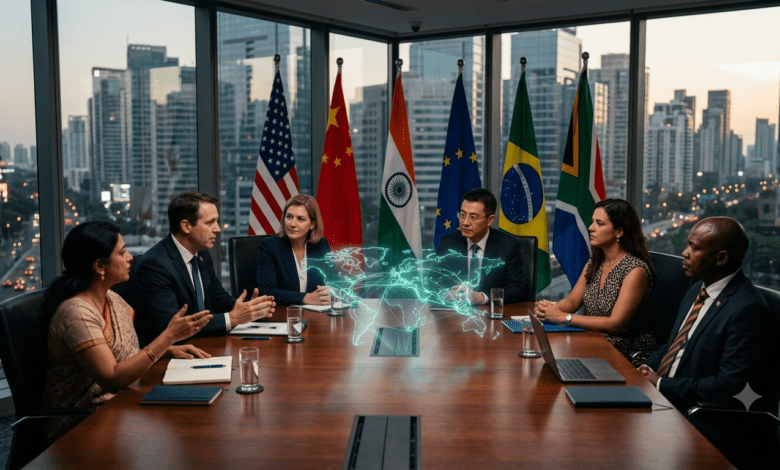
The international architecture established in the late twentieth century is undergoing a structural realignment. In 2026, international relations are no longer dictated by a single superpower or a rigid bipolar rivalry. Instead, the world has transitioned into a complex, fluid multipolar system marked by economic nationalism, technological sovereignty, and issue-based alignment.
Navigating today’s international environment requires managing interconnected security, technological, and economic pressures. Major global actors—from established powers to rising nations—are dynamically redefining how power is projected, alliances are negotiated, and global trade flows.
┌────────────────────────────────────────────────────────────────────────┐
│                   2026 MULTIPOLAR POWER SYSTEM                         │
├──────────────────────┬──────────────────────────┬──────────────────────┤
│    GREAT POWERS      │      MIDDLE POWERS       │     GLOBAL SOUTH     │
│   • United States    │   • India    • Türkiye   │   • BRICS+ Bloc      │
│   • China            │   • Brazil   • Indonesia │   • Resource States  │
│   • European Union   │   • S. Arabia• S. Korea  │   • G77 Coalition    │
└──────────────────────┴──────────────────────────┴──────────────────────┘
1. The Changing Balance Between the United States and China
The relationship between the United States and China remains the primary structural vector of international competition. However, this dynamic is shifting from broad economic decoupling toward hyper-targeted strategic competition.
-
Technological Containment & De-risking: Both nations prioritize domestic supply chain resilience in critical sectors like semiconductor manufacturing, advanced artificial intelligence, and biotechnology. Rather than completely severing bilateral trade, policy relies heavily on strict export controls, targeted tariffs, and outbound investment screening.
-
Institutional Competition: Washington continues to strengthen minilateral security frameworks in the Indo-Pacific (such as QUAD and AUKUS), while Beijing expands its influence through regional development initiatives, alternative trade corridors, and digital infrastructure networks.
2. India’s Growing Role in Global Affairs
India has solidified its position as a central structural bridge in global geopolitics. Operating with deliberate strategic autonomy, New Delhi balances deep security partnerships with Western nations while maintaining functional economic relations with non-Western powers.
                       ┌──────────────────────┐
                       │        INDIA         │
                       │  Strategic Autonomy  │
                       └──────────┬───────────┘
                                  │
         ┌────────────────────────┼────────────────────────┐
         ▼                        ▼                        ▼
  ┌──────────────┐         ┌──────────────┐         ┌──────────────┐
  │ Western Allies│         │ Global South │         │ BRICS / IBSA │
  │ Security & Tech│        │ Trade & Voice│         │ Reform Engine│
  └──────────────┘         └──────────────┘         └──────────────┘
India’s economic growth, domestic manufacturing expansion, and leadership across the Global South make it indispensable for global supply chains and climate negotiations. By hosting key multilateral engagements and acting as a bridge between competing geopolitical blocs, India is demonstrating that modern foreign policy does not require absolute alignment with any single alliance.
3. Russia and the Changing European Security Landscape
European security has been reshaped by sustained geopolitical conflict along NATO’s eastern flank. The result is a permanently transformed security landscape across Europe:
-
NATO Enlargement and Defense Spending: European members of NATO have significantly increased defense expenditures to meet structural operational targets, leading to accelerated reindustrialization of defense manufacturing across the continent.
-
Geopolitical Realignment of Energy: Europe has largely completed its shift away from direct reliance on Russian pipeline gas, reorienting imports toward liquefied natural gas (LNG) from North America, Norway, and the Middle East, while accelerating internal renewable deployment.
4. The Rise of Middle Powers
One of the defining shifts in 2026 is the strategic leverage exercised by middle powers. Countries such as Türkiye, Saudi Arabia, Brazil, Indonesia, South Korea, and Vietnam no longer passively choose sides between major powers.
| Country | Primary Area of Influence | Strategic Approach |
| Saudi Arabia | Energy transitions, capital deployment | Balancing ties between Washington, Beijing, and Moscow |
| Brazil | Climate diplomacy, agricultural trade | Leading Global South initiatives and Amazon conservation |
| Türkiye | Maritime security, regional mediation | Leveraging NATO membership alongside Black Sea influence |
| Indonesia | Critical minerals (nickel), Southeast Asian trade | Utilizing resource nationalism to attract domestic processing investment |
These states practice “multi-alignment”—building issue-based partnerships to advance national security, secure foreign direct investment, and maximize economic flexibility.
5. The Global South and a More Multipolar World
Developing economies are asserting greater influence on the global stage. The expansion of the BRICS framework has established a key platform for countries seeking alternatives to traditional Western-led international financial and political architectures.
               TRADITIONAL vs. EMERGING MULTILATERALISM

      Traditional Frameworks           Emerging Alternatives
   ┌──────────────────────────┐     ┌──────────────────────────┐
   │ • IMF / World Bank       │  VS │ • BRICS New Dev. Bank    │
   │ • UN Security Council    │     │ • Bilateral Currency Deals│
   │ • G7 Economic Alignment  │     │ • Regional Trade Blocs   │
   └──────────────────────────┘     └──────────────────────────┘
Global South nations are increasingly demanding:
-
Reform of voting shares and leadership structures within the International Monetary Fund and World Bank.
-
Direct compensation and equitable financing structures for climate-related energy transitions.
-
Greater domestic value addition before critical raw materials leave their borders.
6. Technology as a Source of Geopolitical Power
Technological leadership has become tightly linked to national power and economic competitiveness. Artificial intelligence, advanced microprocessors, quantum computing, and secure digital infrastructure are now viewed through the lens of national defense.
┌────────────────────────────────────────────────────────────────────────┐
│                   CRITICAL TECHNOLOGICAL PILLARS                       │
├────────────────────────────────────────────────────────────────────────┤
│  [AI Infrastructure]   ► Foundational models, compute hubs, data centers │
│  [Semiconductors]      ► Advanced lithography, domestic fab capacity    │
│  [Digital Sovereignty] ► Data localization, undersea cables, cyber defense│
└────────────────────────────────────────────────────────────────────────┘
Governments actively protect domestic technological ecosystems using subsidies, export restrictions, and state-backed industrial policies. AI foundation models and semiconductor supply chains are recognized as critical strategic infrastructure.
7. Trade, Supply Chains, and Economic Power
Global trade patterns are adapting to geopolitical risks rather than dissolving entirely. Cost minimization is no longer the sole priority; supply chain resilience, redundancy, and security drive corporate and state investment strategies.
                           SUPPLY CHAIN RE-ENGINEERING

  Legacy System:    Raw Material ──► Single Processing Hub ──► End Market

  Modern System:    Raw Material ──► Friendshored Hub 1  ──┐
                                  ──► Nearshored Hub 2    ──┼──► Resilient Market
                                  ──► Domestic Hub 3      ──┘
Key trade movements include:
-
“Friendshoring” and Nearshoring: Moving production networks to geopolitically aligned nations or proximate geographic regions to reduce supply interruption risks.
-
Selective State Intervention: Increased use of targeted tariffs, local content mandates, and strategic subsidies to protect core domestic industries.
8. Energy and Critical Minerals
The transition toward renewable energy has shifted global resource dependencies. While oil and natural gas remain vital for near-term energy security, competition for critical minerals—lithium, cobalt, nickel, copper, and rare earth elements—has intensified.
┌────────────────────────────────────────────────────────────────────────┐
│                     THE STRATEGIC RESOURCE MATRIX                      │
├──────────────────────────────────┬─────────────────────────────────────┤
│   CONVENTIONAL ENERGY (Oil/Gas)  │   CRITICAL MINERALS (Lithium/Rare Earths)
│   • Concentrated in West Asia    │   • Essential for EVs, grid storage, AI
│   • Vulnerable to maritime bottlenecks│ • Supply chains bottlenecked in refining
└──────────────────────────────────┴─────────────────────────────────────┘
Resource-rich nations are creating domestic refining ecosystems rather than exporting raw ores, fundamentally altering international trade dynamics.
9. The Future of Global Alliances and International Institutions
Traditional multilateral bodies face operational constraints due to power competition among veto-holding members. As consensus within universal organizations becomes harder to achieve, international diplomacy is turning toward smaller, flexible minilateral agreements.
Institutions like the United Nations and the World Trade Organization are increasingly complemented—and in some areas bypassed—by focused regional coalitions, specialized technology partnerships, and issue-specific trade blocs.
10. What the New Global Power Structure Means
The emerging international framework brings both distinct challenges and new opportunities:
┌─────────────────────────────────┬─────────────────────────────────┐
│       KEY UNCERTAINTIES         │      ESTABLISHED TRENDS         │
├─────────────────────────────────┼─────────────────────────────────┤
│ • Speed of monetary shift │ • Strategic tech competition│
│ • Long-term alliance stability  │ • Growth of middle-power autonomy│
│ • Multi-regional crisis containment│ • Re-engineering of supply networks│
└─────────────────────────────────┴─────────────────────────────────┘
-
For International Business: Corporate strategy must account for geopolitical risk alongside market demand. Compliance, supply chain flexibility, and regulatory monitoring are essential components of global operations.
-
For Developing Nations: Multipolarity provides options to negotiate investments and partnerships across competing powers rather than accepting single-source demands.
-
For Global Stability: Managing a multipolar system requires continuous diplomatic engagement, robust communication channels, and functional compromises to address shared global challenges.
The international landscape in 2026 is defined by distributed influence rather than centralized dominance. States that successfully build adaptable diplomatic networks, protect strategic assets, and maintain economic flexibility are best positioned to navigate this multipolar reality.
Sources & References
-
Ernst & Young (EY-Parthenon): Geopolitical Outlook 2026: A World Rewired for Risk and Resilience.
-
Boston Consulting Group (BCG): The Geopolitical Forces Shaping Business in 2026.
-
Amundi Research Center: Geopolitics: Power As Policy 2026.
-
Journal of World Economic Research: Middle Powers in Contemporary Geopolitics.
-
BRICS Official Portal: BRICS Expansion & Institutional Frameworks 2026.
To explore how these diplomatic shifts affect international business, watch Tested, Trusted, Torn? How Middle Powers See the New Global Order. This panel discussion features leading experts from Brazil, India, Indonesia, and South Africa debating how middle powers navigate multipolar competition.