How Artificial Intelligence Could Transform Healthcare and Medical Research
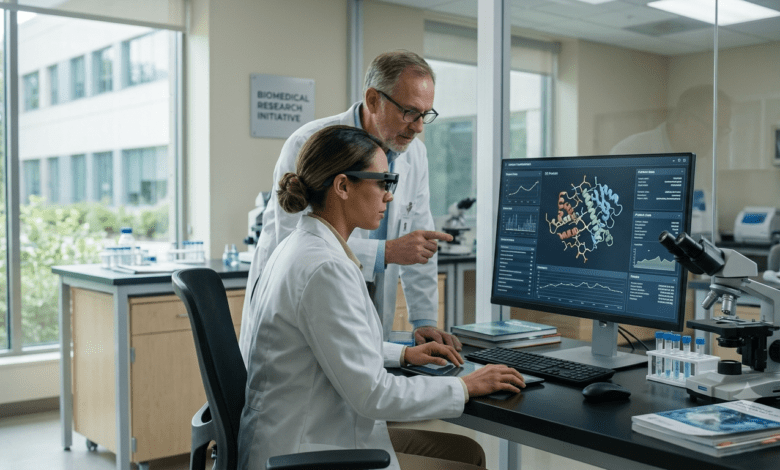
Healthcare and life sciences stand at the edge of a fundamental shift. Across hospitals, laboratories, and clinical networks worldwide, artificial intelligence (AI) is moving from an experimental concept to an active foundation of modern clinical operations.
For decades, medicine operated on reactive, generalized frameworks. Diagnostics relied heavily on manual interpretation, treatment protocols followed broad statistical averages, and discovering a single new life-saving drug took over a decade of trial and error. Today, computational biology, machine learning, and generative systems are altering this paradigm.
The integration of AI in healthcare and medical research offers an unprecedented opportunity: predicting conditions before symptoms emerge, tailoring therapies to individual genomic signatures, and accelerating laboratory discoveries into bedside treatments in record time.
How AI Is Already Changing Healthcare
While the full potential of artificial intelligence in clinical settings remains an evolving frontier, several applications are already transforming day-to-day patient care and hospital administration.
Medical Imaging and Diagnostics
Radiology, pathology, and ophthalmology were among the earliest fields to integrate artificial intelligence. Deep learning algorithms, trained on vast repositories of medical scans, can now spot subtle anomalies that human eyes might overlook due to fatigue or density variations.
-
Radiology: Computer-vision algorithms evaluate CT scans and MRIs for early signs of ischemic strokes, micro-fractures, or pulmonary nodules. In stroke triage, AI toolsets automatically scan non-contrast head CTs to detect intracerebral hemorrhage, immediately notifying emergency response teams to save critical brain tissue.
-
Pathology: Software applications analyze digitized whole-slide biopsy images. These tools assist pathologists by instantly highlighting regions suspicious for malignancy, significantly reducing diagnostic error rates in diseases like prostate and breast cancer.
-
Ophthalmology: Autonomous diagnostic tools scan high-resolution retinal images directly in primary care clinics. Systems cleared by regulatory bodies can evaluate diabetic retinopathy without requiring an immediate specialist present, expanding access to preventive care for millions of patients at risk of vision loss.
Clinical Decision Support and Patient Monitoring
Modern intensive care units and ward floors generate continuous streams of telemetry data. Machine learning systems act as continuous safety nets within these high-volume environments.
By constantly sifting through heart rates, blood pressure trends, oxygenation levels, and laboratory values in real time, clinical decision support (CDS) tools flag early indicators of deterioration. For example, early-warning algorithms can predict septic shock hours before clinical onset, giving medical teams critical time to administer life-saving interventions.
In outpatient care, remote patient monitoring devices utilize wearable sensors to continuously assess physiological metrics. Algorithms process these continuous inputs to detect cardiac arrhythmias like atrial fibrillation or abnormal glucose swings, prompting targeted clinical interventions before a patient requires emergency hospitalization.
Administrative and Hospital Workflows
Administrative friction remains one of the largest burdens on modern healthcare systems, directly contributing to clinician burnout. AI is relieving this operational strain:
-
Ambient Clinical Intelligence: Generative AI tools listen securely to doctor-patient conversations during appointments, automatically summarizing clinical notes and filing organized documentation into Electronic Health Record (EHR) systems.
-
Resource Optimization: Predictive models analyze historical patient volumes, seasonal illness trends, and local demographics to optimize emergency room staffing, bed management, and surgical room scheduling.
-
Claims Processing: Intelligent automation tools streamline medical coding, insurance pre-authorizations, and billing verification, reducing administrative overhead and claims denial rates.
Personalized Treatment
The old model of “one-size-fits-all” medicine is gradually giving way to precision healthcare. Machine learning models analyze complex combinations of genomic sequencing, lifestyle factors, environment, and medical histories to predict how individual patients will respond to specific drugs.
In oncology, precision diagnostic tools assist oncologists by analyzing a tumor’s specific genetic mutations to recommend targeted therapies. This approach avoids trial-and-error treatment rounds, maximizing therapeutic efficacy while minimizing toxic side effects.
AI and Medical Research
Beyond hospital walls, AI in healthcare and medical research is fundamentally changing how scientists understand human biology and fight disease.
  Traditional Discovery Pathway
  [ Basic Research ] ──> [ Target ID ] ──> [ Drug Design ] ──> [ Trial Phase I-III ] (10-15 Years)

  AI-Accelerated Scientific Pathway
  [ Multimodal Datasets ] ──> [ Predictive Models / AlphaFold ] ──> [ Targeted Candidates ] (Months to Years)
Drug Discovery and Development
Historically, developing a new pharmaceutical candidate required up to 15 years and billions of dollars, with high failure rates during early clinical testing.
Generative AI models and foundational biology architectures—such as DeepMind’s Nobel-winning AlphaFold series and protein language models like ESM—are fundamentally altering this timeline.
Instead of screening millions of physical chemical compounds by hand, researchers use neural networks to accurately predict 3D molecular structures, target interactions, and atomic bonding behavior in minutes.
| Traditional Drug Discovery | AI-Accelerated Drug Discovery |
| Target Identification: Years of manual laboratory screening. | Target Identification: Predictive mapping of genomic/protein interaction networks. |
| Molecule Design: Physical synthesis and trial-and-error testing. | Molecule Design: De novo algorithmic generation of targeted molecular structures. |
| Interaction Testing: Months per compound via physical crystallography. | Interaction Testing: Instant biological simulations via molecular diffusion models. |
| Timeline: 4 to 7 years prior to initial clinical trials. | Timeline: Compressed to 12 to 24 months for initial drug candidates. |
Computational biotechs are now using these models to advance custom-built therapies for complex cancers, rare autoimmune disorders, and multi-drug-resistant bacterial infections into early human clinical trials.
Analysis of Large Medical Datasets and Biomarkers
Modern biomedical research generates massive datasets—from full-genome sequences and transcriptomics to longitudinal patient registries. Human researchers cannot manually analyze or spot subtle patterns across billions of biological data points.
Machine learning algorithms excel at this complex pattern recognition. They can rapidly scan global biobanks to isolate novel biomarkers—measurable biological indicators that signal the earliest presence of conditions like Alzheimer’s, Parkinson’s, or early-stage cardiovascular disease.
Clinical Trial Optimization
Up to 80% of traditional clinical trials experience delays or failure due to recruitment bottlenecks, non-representative cohort selection, or unexpected safety issues.
AI algorithms improve trial design by searching anonymized EHR databases to recruit ideal, highly qualified participant cohorts based on molecular profile matching. Furthermore, predictive modeling enables researchers to monitor synthetic control arms or anticipate adverse side effects early, lowering trial costs and enhancing participant safety.
Potential Benefits of AI in Healthcare
The systematic integration of predictive and generative intelligence across clinical medicine offers major systemic benefits:
                  ┌──────────────────────────────────────────┐
                  │   Core Advantages of Medical AI Systems  │
                  └────────────────────┬─────────────────────┘
                                       │
         ┌──────────────────┬──────────┴───────────┬──────────────────┐
         ▼                  ▼                      ▼                  ▼
┌─────────────────┐ ┌───────────────┐    ┌──────────────────┐ ┌───────────────┐
│ Faster & More   │ │ Personalized  │    │ Reduced Research │ │ Systemic     │
│ Accurate        │ │ Care & Early  │    │ Timelines and    │ │ Operational   │
│ Diagnoses [1.1.1]│ │ Detection     │    │ Costs [1.2.2]    │ │ Efficiency    │
└─────────────────┘ └───────────────┘    └──────────────────┘ └───────────────┘
-
Faster and More Precise Diagnosis: Automated image analysis and decision support assist clinicians in triaging urgent cases within minutes rather than hours, reducing diagnostic error rates.
-
Earlier Disease Detection: Algorithms spot subtle changes in tissue density, blood work trends, or genetic risk scores long before outward clinical symptoms appear, shifting care toward early prevention.
-
Personalized Care Strategies: Treatments can be tailored to individual biology and genomics, improving response rates while avoiding unnecessary procedures.
-
Reduced Drug R&D Timelines: Compressing candidate identification from years down to months means effective treatments reach patients facing critical illnesses significantly faster.
-
Improved Resource Efficiency: Automating routine clinical notes, schedule management, and diagnostic triage frees physicians to spend more face-to-face time with their patients.
How AI Could Transform Medical Research in the Future
Looking forward over the next decade, the convergence of multimodal artificial intelligence, advanced robotics, and life sciences promises even deeper paradigm shifts.
Multimodal Data Integration
Current medical AI tools generally operate within specialized domains—such as reading a chest X-ray or screening a genetic sequence. Future architectures, however, will be fully multimodal.
These foundational medical models will simultaneously evaluate a patient’s whole-genome sequence, real-time telemetry from wearables, longitudinal medical records, environmental exposure data, and high-resolution imaging scans. Synthesizing these disparate data streams will give care teams a complete, 360-degree view of human health.
Autonomous Hypothesizing and Predictive Simulations
In scientific laboratories, generative models are transitioning from analytical tools to collaborative thought partners. AI platforms will soon propose biological hypotheses, design laboratory experiments, predict candidate reaction outcomes, and instruct automated robotic wet labs to execute assays around the clock.
Additionally, researchers will increasingly rely on “digital twins”—highly accurate, computationally simulated models of human organs and cellular networks. Digital twins will allow scientists to test candidate drug compounds in software environments before administering them to human subjects, radically increasing clinical safety.
Challenges, Risks, and Ethical Considerations
Despite the clear benefits of AI in healthcare and medical research, rapid integration introduces critical challenges that demand rigorous oversight.
  ┌──────────────────────────────────────────────────────────────────┐
  │                   Key Challenges and Risks                       │
  ├───────────────────┬──────────────────────────┬───────────────────┤
  │ Data Privacy      │ Algorithmic Bias         │ Black Box Problem │
  │ Security risks    │ Historical data disparities│ Lack of model     │
  │ in sensitive EHRs │ skewing output metrics   │ interpretability  │
  └───────────────────┴──────────────────────────┴───────────────────┘
Patient Privacy and Data Security
Training robust healthcare models requires access to vast volumes of sensitive patient data. Protecting patient confidentiality against cyber threats and data leaks demands strict adherence to global privacy laws like HIPAA and GDPR, along with secure architectures like federated learning—where algorithms learn across distributed networks without raw medical records leaving local hospital firewalls.
Algorithmic Bias and Data Equity
An AI model is only as unbiased as the data used to train it. If training sets predominantly feature specific demographics or geographic regions, the resulting algorithms may perform poorly or incorrectly diagnose underrepresented populations. Developers must actively train and validate models on diverse, globally representative datasets to ensure equitable care outcomes.
Accuracy, Reliability, and Transparency
Language models and complex neural networks occasionally generate plausible but incorrect conclusions—often referred to as “hallucination.” In clinical settings, an incorrect diagnostic suggestion or faulty medication dosage calculation carries severe, real-world consequences.
Furthermore, many deep-learning models suffer from the “black box” problem, where the mathematical reasoning behind a specific decision remains opaque. Regulators, clinicians, and patients must be able to understand why an AI system reached a specific conclusion before fully trusting its advice in critical situations.
Regulatory Frameworks and Accountability
Global health authorities, such as the U.S. Food and Drug Administration (FDA) and the European Medicines Agency (EMA), are continuously updating framework standards for Software as a Medical Device (SaMD). Clear legal boundaries are essential to establish liability when a medical system fails or generates an adverse recommendation.
The Role of Doctors, Researchers, and Healthcare Professionals
A common concern surrounding medical technology is whether artificial intelligence will eventually replace human physicians. However, experts across medicine and scientific research overwhelmingly agree on a different future: AI will serve as an essential assistant rather than a replacement.
  ┌──────────────────────────────────────────────────────────────────┐
  │                 Human-in-the-Loop Care Model                     │
  ├─────────────────────────────────┬────────────────────────────────┤
  │ Computational AI Strengths      │ Essential Human Virtues        │
  ├─────────────────────────────────┼────────────────────────────────┤
  │ Rapid image processing [1.1.1]  │ Empathy and compassionate care │
  │ Pattern detection across data   │ Ethical decision-making        │
  │ Continuous monitoring [1.1.2]   │ Contextual clinical judgment   │
  └─────────────────────────────────┴─────────────────────────┴──────┘
Medicine involves far more than computational analysis and pattern recognition. It relies deeply on clinical intuition, nuanced judgment, ethical considerations, and human empathy.
An algorithm can process a complex oncology profile in seconds, but it cannot deliver a sensitive diagnosis with compassion, comfort a grieving family, or navigate nuanced end-of-life decisions with a patient.
Key Takeaway: The goal of modern health tech is not to remove the human touch, but to restore it. By handling routine paperwork, sifting through vast diagnostic data, and streamlining research, smart tools give doctors and scientists more time to focus on what matters most: human-centered patient care.
What the Future Could Look Like
Over the coming decade, responsible, evidence-based integration of artificial intelligence will gradually alter the everyday experience of healthcare:
-
Proactive Rather Than Reactive Care: Instead of visiting a doctor only when feeling sick, integrated health monitoring platforms will continuously spot subtle physiological shifts, helping individuals correct health risks years before disease takes hold.
-
Accelerated Rare Disease Management: Specialized AI models will help diagnose rare genetic conditions that currently take years of specialist referrals to identify, matching patients to active clinical trials globally.
-
Democratization of Advanced Diagnostics: High-quality diagnostic capabilities—such as autonomous screening tools—will extend into rural primary care clinics, low-resource regions, and community health centers, bridging longstanding global access gaps.
Artificial intelligence represents one of the most promising evolutions in modern medical science. From accelerating life-saving drug discovery and identifying subtle diagnostic indicators to reducing administrative friction, these technologies are helping clinicians and researchers solve challenges that were once considered insurmountable.
Realizing this potential requires a balanced approach. Unlocking the true power of AI in healthcare and medical research demands rigorous scientific validation, robust data privacy standards, proactive bias mitigation, and consistent human oversight.
When developed responsibly and guided by medical expertise, artificial intelligence will not replace the human touch in medicine—it will empower researchers to uncover remedies faster and allow clinicians to deliver safer, more precise, and deeply compassionate patient care.